The Budget has given signals that India is sensitive to the US needs and willing to walk the extra mile, but if need be, we should respond in equal measure as a sovereign nation, notes Ajay Srivastava.
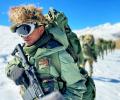
The United States will continue to support India with equipment and other things it needs along the Line of Actual Control (LAC) with China, a top American admiral has told lawmakers, asserting that Washington and New Delhi share a 'tremendous partnership'.
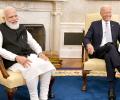
Biden welcomed Prime Minister Modi at the Summit and said "it is wonderful to see you again in person".
"This trip will advance the Biden-Harris administration's rock-solid commitment to a free and open Indo-Pacific," White House Press Secretary Jen Psaki said in Washington, DC on Wednesday.

Ever since the Quad started taking shape in 2007, China has been saying that the four-member grouping will be bound to fail. But much to the chagrin of Beijing, it picked up pace in the recent years emerging as a premier strategic group especially challenging China's assertiveness in the disputed South China Sea.
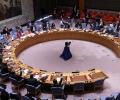
The UK government made its first major commitment to support UN Security Council reforms and India's permanent membership within it as part of a refreshed defence and foreign policy review tabled in Parliament on Monday.

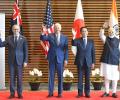
In the midst of rising global concern over China's military expansionism, India and three other member nations of the Quad on Thursday vowed to uphold a rules-based international order underpinned by respect for territorial integrity and sovereignty, freedom of navigation and peaceful resolution of disputes.
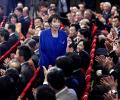
As a protege of Shinzo Abe, Takaichi is expected to scale bilateral ties much higher. Trade and investment shall grow. People-to-people contacts shall be scaled up, points out Dr Rajaram Panda.

In the short run, the Trump presidency has already ensured one thing: The assumptions of the past can no longer guide the strategies of the future, points out Manish Dabhade.

'Our record and our actions and stances is fairly clear and by criticising it repeatedly, it doesn't make us less credible'
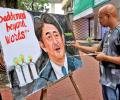
Prime Minister Narendra Modi will join several global leaders to pay tributes to Japan's slain former prime minister Shinzo Abe at his state funeral in Tokyo on Tuesday.

"We value our partnership with India, and we've been increasing it and doing a lot more, over time. They have the same security challenge, primary security challenger that we do, and it's real on their northern border," Admiral John Christopher Aquilino, commander of United States Indo-Pacific Command, told members of the House Armed Services Committee during a hearing on Indo-Pacific National Security Challenges.
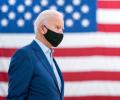
Describing India as one of the most important partners of the United States in the Indo-Pacific region, the Biden Administration on Tuesday said that it welcomes India's emergence as a leading global power and its role as a net security provider in the region.

This is Blinken's first visit to India after assuming charge as the US Secretary of State and the third by a high-ranking Biden administration official after it came to power in January.

With Donald Trump all set to become US president, Indian exporters may face high customs duties for goods like automobiles, textiles and pharmaceuticals if the new US administration decides to pursue the 'America First' agenda, opined trade experts. Experts also said that Trump could also tighten H-1B visa rules, impacting costs and growth for Indian IT firms. Over 80 per cent of India's IT export earnings come from the US, making it vulnerable to changes in visa policies.

'...it should not delude itself into thinking that India's security or its great-power ambitions will be advanced by those partnerships.'
'Instead, what India should focus on is on riding out the next three-and-a-half years of Trump's presidency with minimal damage to itself.'

The USNS Salvor was welcomed with a ceremony at the shipyard on Monday, and it is the first ship to arrive after the signing of the MSRA.

China criticised the forthcoming meeting of the Foreign Ministers of India, Australia, Japan and the United States in Tokyo, saying it is opposed to the formation of "exclusive clique" harming third party's interests.

New Delhi had proposed during the 2+2 dialogue in April that the US navy could avail of the services and expertise of Indian shipyards.
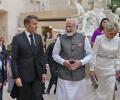
India-France synergy is poised to open vistas of collaboration between the two countries, notes Rup Narayan Das.

The top diplomats of Quad nations on Friday denounced as "inadmissible" any use or threat of use of nuclear weapons in the Ukraine war and strongly opposed any "unilateral actions" that seek to change the status quo in the South and East China Seas, a region that has witnessed increasing Chinese military offensive.
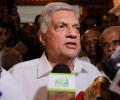
China will not be allowed to use the southern port of Hambantota for military purposes, Sri Lankan President Ranil Wickremesinghe has said, apparently attempting to allay fears in India and the United States about China's increasing maritime presence in the strategic Indo-Pacific region.

The new framework of the ministerial dialogue was initiated in order to provide a forward-looking vision for the strategic partnership between the two countries.

The Squad seeks to counter China's power assertions in the South China Sea region.
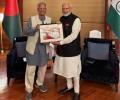
In his first meeting with Bangladesh Chief Adviser Muhammad Yunus, Prime Minister Narendra Modi on Friday flagged concerns over the attacks on minorities, including Hindus and conveyed that any rhetoric that vitiated the environment was best avoided.

Less than a month after the historic visit of Prime Minister Narendra Modi to the US, a Congressional senatorial Committee has passed a resolution recognising Arunachal Pradesh as an integral part of India.
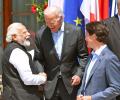
Experts say Canada's allegations regarding the Indian government's involvement in the fatal shooting of Khalistan Tiger Force chief Hardeep Singh Nijjar in Canada 'could be most significant test of strength of US-India partnership since early 2000s'.
President Trump made these remarks on Monday while talking to reporters aboard Air Force One on his way back to Joint Base Andrews from Florida.
'New Delhi is not naive about its foreign policy choices.'

Chinese foreign ministry spokesperson Mao Ning said China believes that state-to-state interactions should be in line with the trend of the time which is peace and development rather than exclusivity.

Reports (not denied by India) that the USA had 'for the first time provided real-time details to their Indian counterparts on the Chinese positions and force strength in advance of a PLA incursion' into Tawang at the LAC in December 2022, helping India thwart China's expansionist designs, show how operationally effective the USA-India friendship has become on the ground. A engaging excerpt from Sreeram Chaulia's must-read new book, Friends: India's Closest Strategic Partners.

The Ministry of External Affairs (MEA) said the leaders will exchange views and assessments about important developments in the Indo-Pacific.
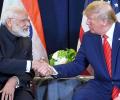
It would be the prime minister's first bilateral visit to the US after Trump became president for a second term.

Blinken and Indian leaders on Wednesday will discuss a plethora of pressing issues such as the fluid situation in Afghanistan, regional security concerns, COVID-19 response and ways to boost Indo-Pacific engagement, people familiar with the agenda of talks said.

In the opinion piece after the summit, the leaders said the cooperation, known as "the Quad," was born in crisis. It became a diplomatic dialogue in 2007 and was reborn in 2017.
'Granting the country's highest civilian honour to Prime Minister Modi was surprising as it indicated the government was going out of its way to have India as a close partner.'

Addressing the Indian diaspora at Nassau Coliseum in New York, PM Modi said that people will witness the Summer Olympics taking place in India as well. Last year, PM Modi said that India will make efforts to host these big sporting events.

'Sullivan and Jaishankar welcomed the cooperation in recent weeks that resulted in deliveries of over USD 500 million in COVID-19 relief supplies from the US federal and state governments, US companies and private citizens across America for the people of India'
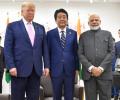
The main topic of discussion was Indo-Pacific, how the three countries can work together in terms of connectivity, infrastructure, ensuring peace and security, and working together to build upon this new concept, Foreign Secretary Vijay Gokhale said.

United States Secretary of State Antony Blinken has said that he had a productive meeting with visiting External Affairs Minister S Jaishankar during which they discussed the bilateral ties, COVID-19 relief efforts, India-China border situation and Afghanistan and vowed to work together to address areas of shared concern.
